



Dangerous Goods Safety Advisor DGSΑ/ADR/RID/IMDG
Dangerous Goods Safety Advisor (DGSA) is a certified professional who provides guidance and support to ensure the safe transport of dangerous goods, in accordance with legal requirements and international standards Dangerous goods transport includes the movement of substances or products that may pose risks to human health, safety, the environment, or property, such as chemicals, explosives, toxic substances, or other hazardous materials.
Key Responsibilities of the Dangerous Goods Safety Advisor include:
- Regulatory Compliance: Ensures that the transport of dangerous goods complies with national and international regulations, such as ADR (for road transport), RID (for rail), IMDG (for maritime transport) and IATA (for air transport). The advisor also supports compliance with EU legislation and other international agreements
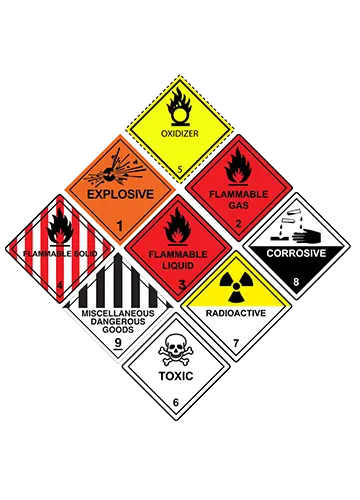
- Classification and Labelling of Dangerous Good: Assists in the correct classification, labelling, and marking of dangerous goods in accordance with ADR and other relevant regulations. This includes identifying hazards (e.g., toxicity, flammability) and ensuring that packages are marked with the appropriate hazard labels and placards
- Transport Planning and Coordination: Oversees the planning and organization of dangerous goods transport, taking into account specific requirements such as selecting the appropriate mode of transport, ensuring compliant packaging, and preparing the required transport documentation.
- Personnel Training: Provides training to personnel involved in the handling and transport of dangerous goods. This includes the proper use of personal protective equipment (PPE), safe handling procedures, and emergency response training.
- Risk Assessment and Safety Measures: Conducts risk assessments related to the transport of dangerous goods and proposes appropriate safety measures to prevent incidents. This includes selecting suitable packaging, protecting vehicles transport, and managing risks across land and sea transport. The DGSA is also responsible for preparing and implementing Emergency Response Plans and the Security Plan plan)».
- Annual Report: Prepares an annual report for both company management and the relevant public authority, detailing the company’s activities involving dangerous goods transport. The report includes recommendations for operational improvements to enhance safety in loading, unloading, and transport. The initial report must be submitted within 60 days of the advisor’s appointment and thereafter within the first month of each calendar year.
- Emergency Management: In the event of an accident or spill involving dangerous goods, the DGSA provides instructions for effective response and recovery, aiming to minimize harm to people and the environment. The advisor is also responsible for preparing the official Accident Report.
- Legal Updates and Advisory Services: Keeps up to date with changes in legislation, safety standards, and technological developments in the transport of dangerous goods.The DGSA informs businesses of relevant updates and best practices
To practice as a Dangerous Goods Safety Advisor, one must be certified and possess in-depth knowledge of dangerous goods transport and relevant legal requirements. In Greece, for example, a certification is issued upon successful completion of accredited training and examinations. This certification must be renewed every five (5) years through additional exams conducted by the Ministry of Transport.
Environment, Energy & Security
- Energy Performance Certificate (EPC)
- Gas Tightness Certificate
- Environmental Studies
- Fire Protection Studies
- Health and Safety Officer
- Dangerous Goods Safety Advisor DGSΑ/ADR/RID/IMDG
- Responsible Declarations of the Electrician-Installer (Y.D.E. – DEH Plans)
- Technical Expert Assessment (Construction, Damages, Accidents)
- Loading Analysis and Planning for Heavy Construction Equipment
- Load Lifting Studies (Lifting Plan)